©
Created & Curated by Zakaria Talali

The SaaS that automates the job search with AI.
Designed, built and shipped to production alone: 13,000+ users and a complete platform — Next.js, Python services, PostgreSQL, Stripe and AI.
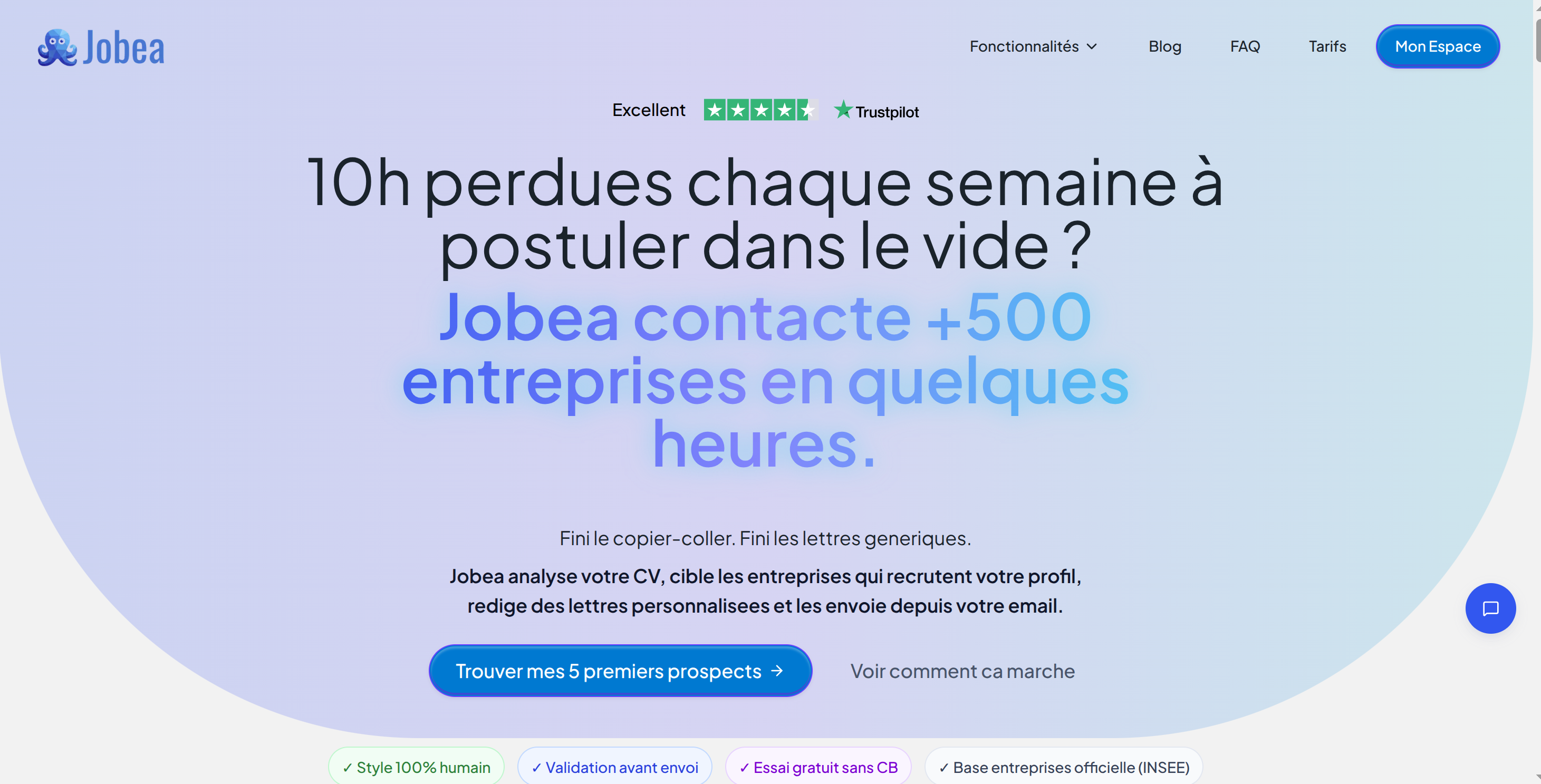
80% of a job search’s time is wasted.
The problem
Finding the right companies, writing generic letters, reworking your CV — and getting no reply at all. The candidate knows neither who to contact, nor how to write a message that doesn’t end up in the trash.
The solution: 5 steps, under 4 minutes
- AI CV analysis — score, strengths, areas for improvement, recommended sectors.
- Express onboarding — target role, contract type, geographic area.
- Targeted search — backed by the official register of French companies.
- Preview before payment — the user reads their letters before paying. Proof, not promise.
- Automated sending — personalized letters and emails, from their own account.
The stance: everything is asynchronous and streamed in real time. Results appear live instead of a frozen loading screen — the user sees the product working.
The entire project, alone — from the first commit to daily support.
Product & UX
Onboarding, pricing, preview-before-payment logic.
Front-end
Next.js 14 (App Router), React, TypeScript, Tailwind, Radix UI.
Back-end
Next.js API, Python microservices (FastAPI), business endpoints.
Database
Prisma modeling (65 models, 26 migrations), integrity and PostgreSQL queries.
AI
Gemini integration: CV analysis, cover letter generation, enrichment, SEO.
Architecture
Microservice split, Next.js ↔ Python service orchestration, failure isolation.
Payment
End-to-end Stripe: checkout, webhooks, subscriptions, credits.
Infra & DevOps
Vercel + Railway, scheduled jobs, monitoring, rate-limiting.
Security & GDPR
Anti-abuse protections, compliance and data retention policy.
Growth
Automated SEO, marketing attribution, analytics dashboards.
Customer support
Day-to-day support: answering users, handling incidents and helping with onboarding.
Improvement loop
Every piece of feedback and reported bug feeds a continuous feedback → fix → release loop that prioritizes product evolution.
« This is not a school project. It’s a production product, with real paying users, real incidents and real constraints: GDPR, fraud, scaling. »
A complete platform, end to end.
Front-end
Back-end
AI
Payment & emails
Infra
Security & Compliance
Three services, one database, Stripe as the source of truth.
The technical depth, in three parts.
① Company search on official data
The heart of the product. From a free-text role and an area, Jobea finds the relevant companies in the official register of French companies, live.
- Translate a free-text role into business sectors (from the fastest to the smartest, with caching).
- Convert an area and a radius into a geographic search (real distance calculation).
- Handle the load and quotas of the source API without ever failing the user’s search.
- Clean, deduplicate and rank by relevance, while respecting a GDPR opt-out list.
Key point: company data is not stored — it comes live from the official source on every search. Always up to date.
② CV analysis: from PDF to structured profile
The CV is treated as a visual document (not just text), which makes it possible to account for layout. A Vision AI extracts a structured, validated profile from it (identity, experience, skills, score, profile type). With safeguards: file security, rejection of documents that aren’t CVs, and contextualized scoring based on the targeted contract type.
③ Real-time streaming (Server-Sent Events)
Rather than a frozen loading screen, results appear one by one, via Server-Sent Events. Engineering highlights: parallelized processing, failure isolation (a failing item never interrupts the batch), and payment consistency — idempotent transactional charge then automatic refund of failed items. The user only pays for what worked.
What the user gets in their hands.
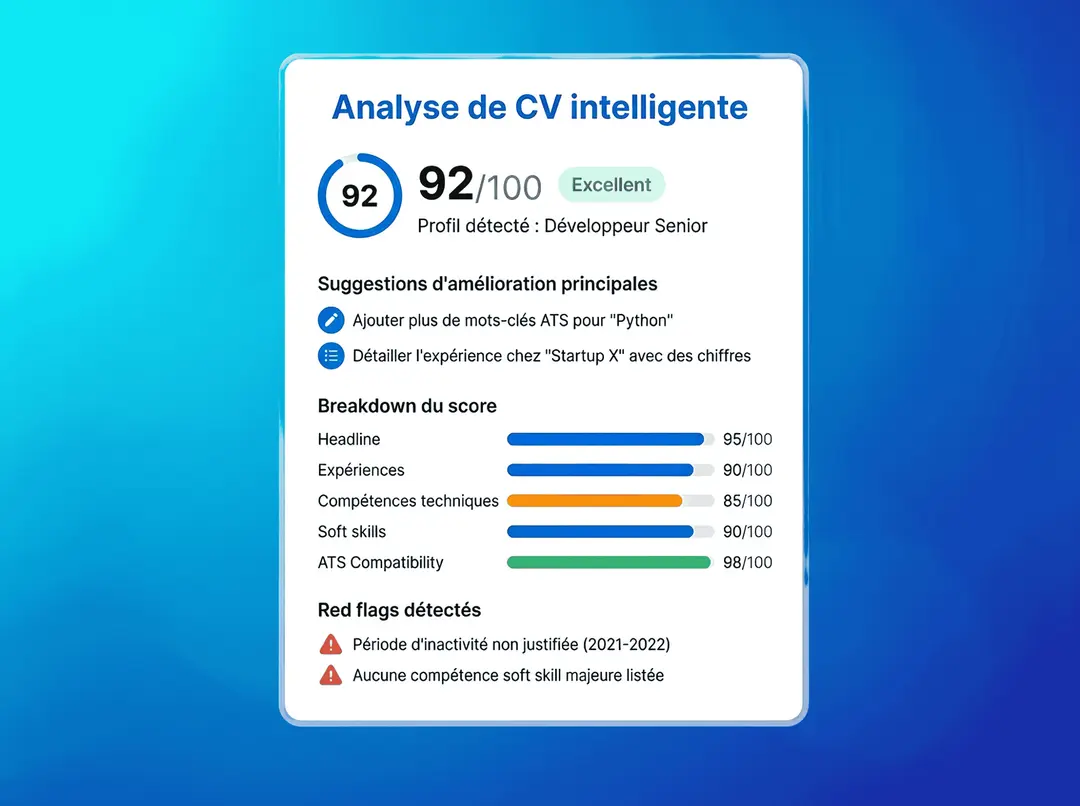
Smart CV analysis
Upload your CV and get a score out of 100 with concrete suggestions. The analysis detects weaknesses, red flags, and guides you to optimize your application.
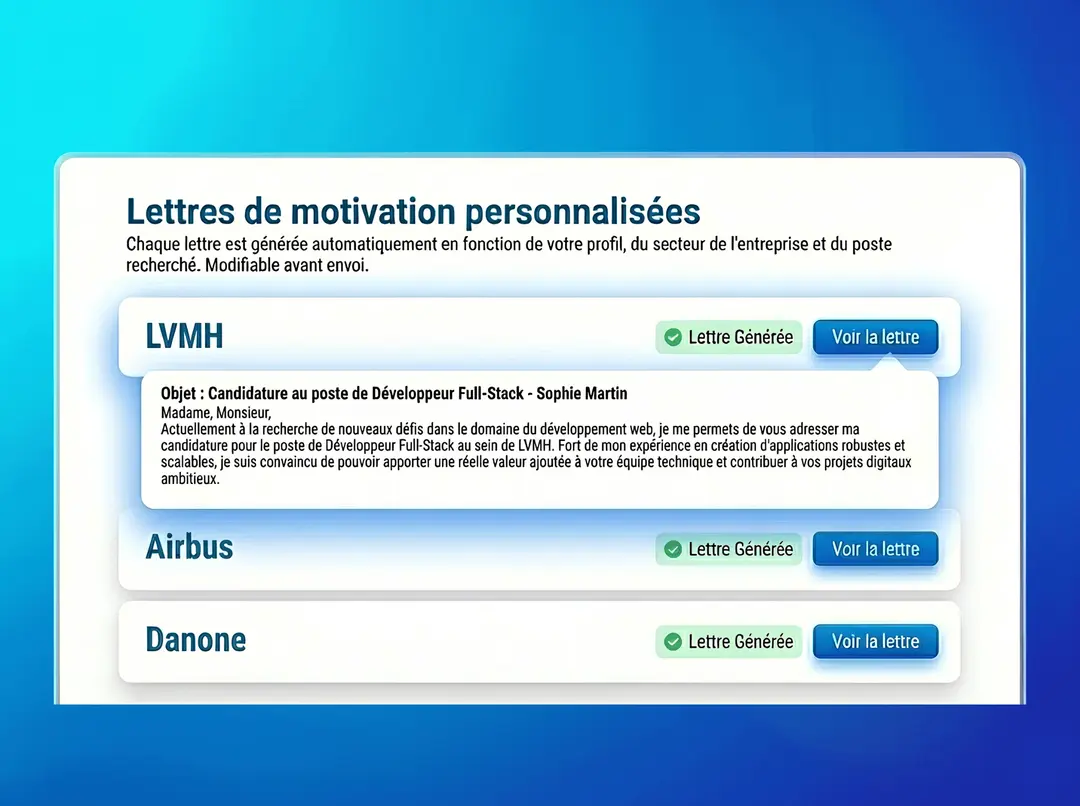
Personalized cover letters
Each letter is generated automatically based on your profile, the company’s industry and the targeted role. Editable before sending.
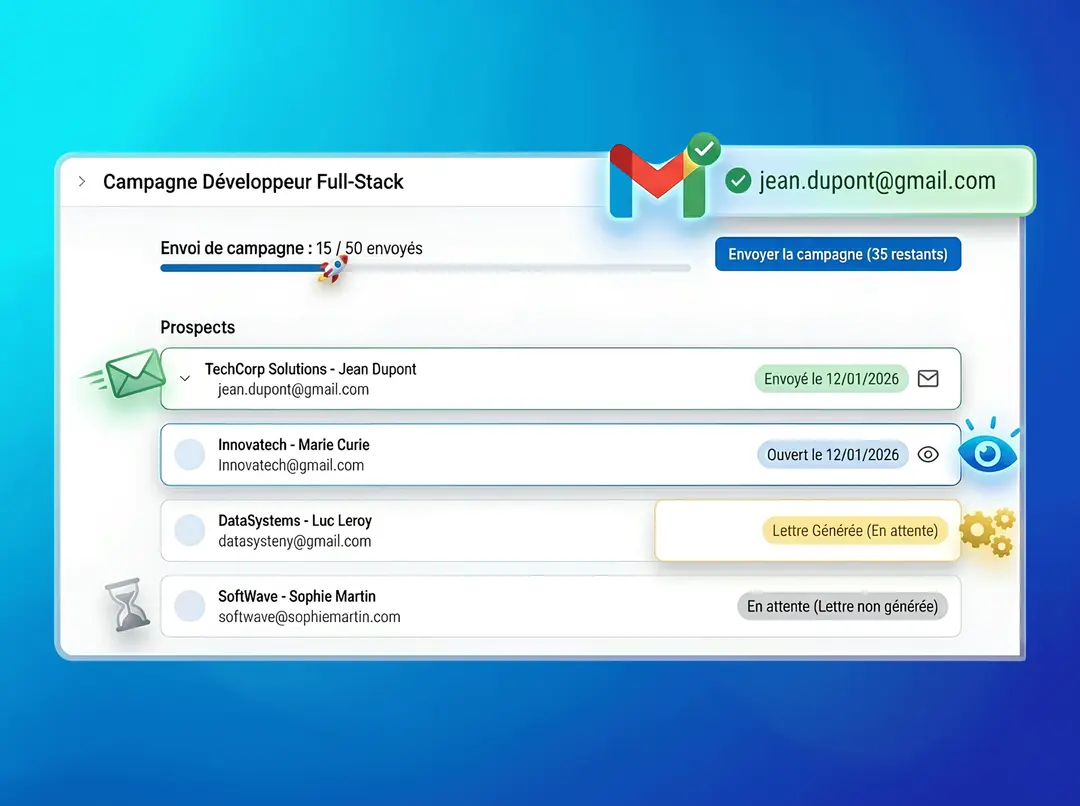
Automatic email sending
Connect your email (Gmail, Outlook, Yahoo or other) once. Jobea sends your applications with your CV attached. The system respects each provider’s limits to avoid spam.
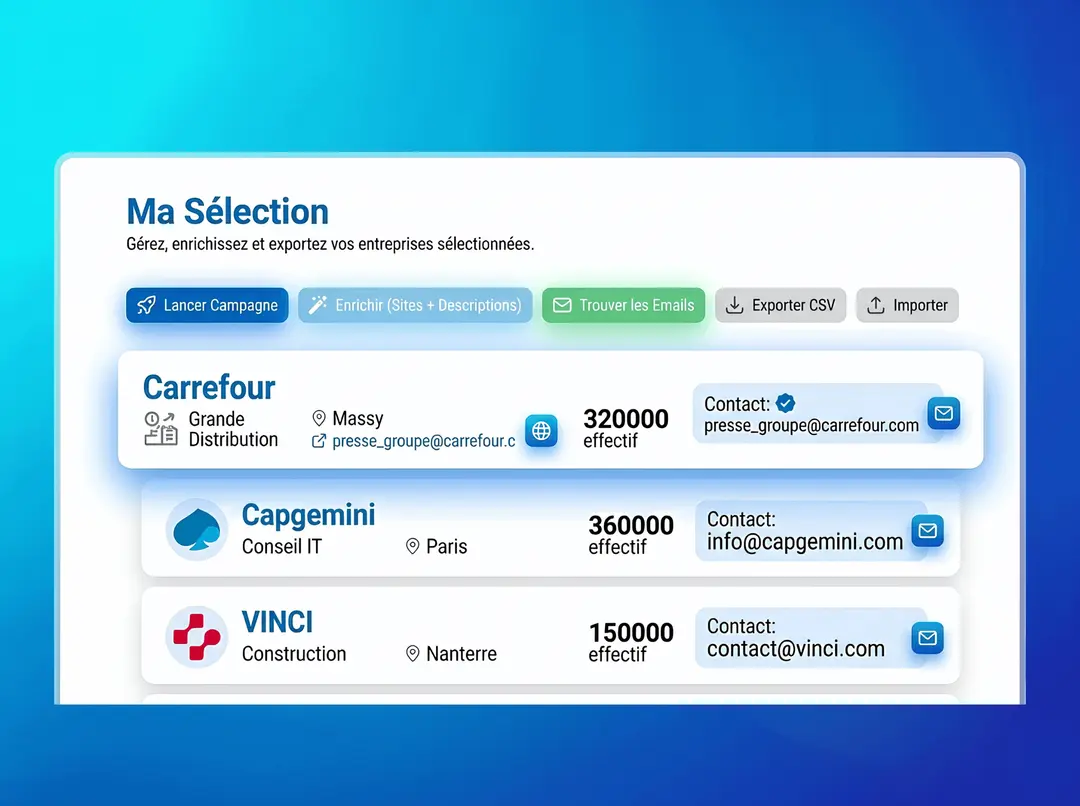
My Selection
Manage your selection of companies. Enrich them automatically with HR emails and websites. Export to build your campaigns.
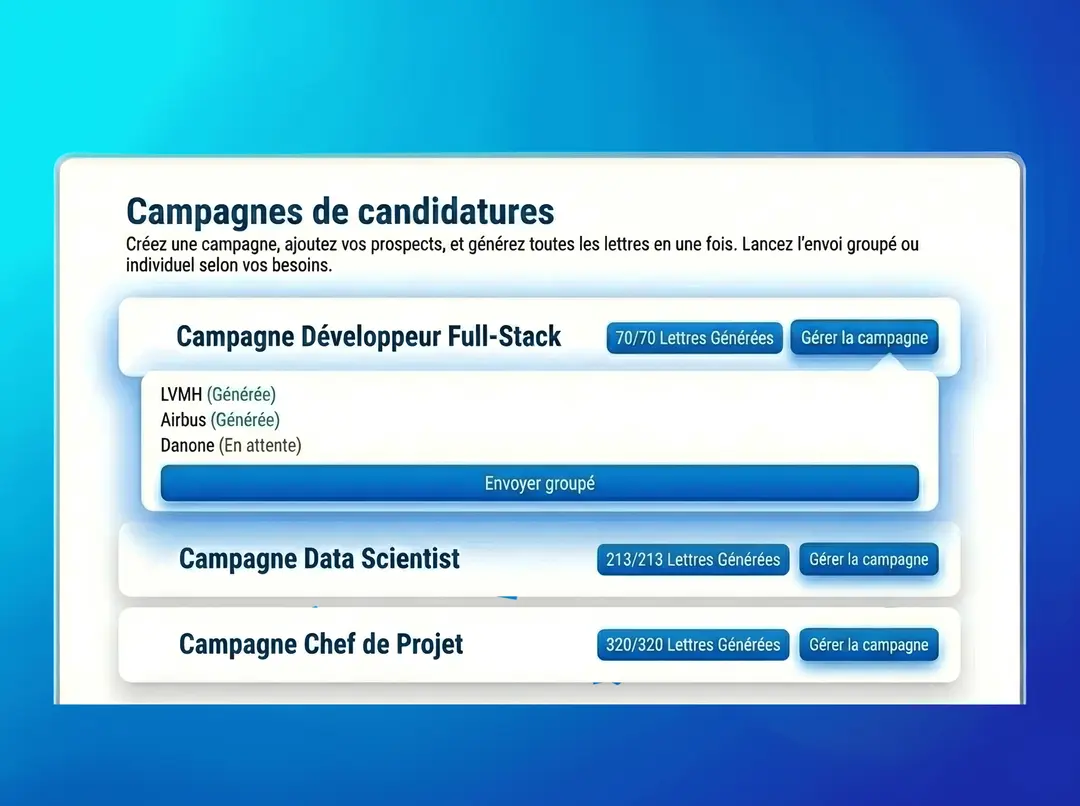
Application campaigns
Create a campaign, add your prospects, and generate all the letters at once. Launch bulk or individual sending depending on your needs.
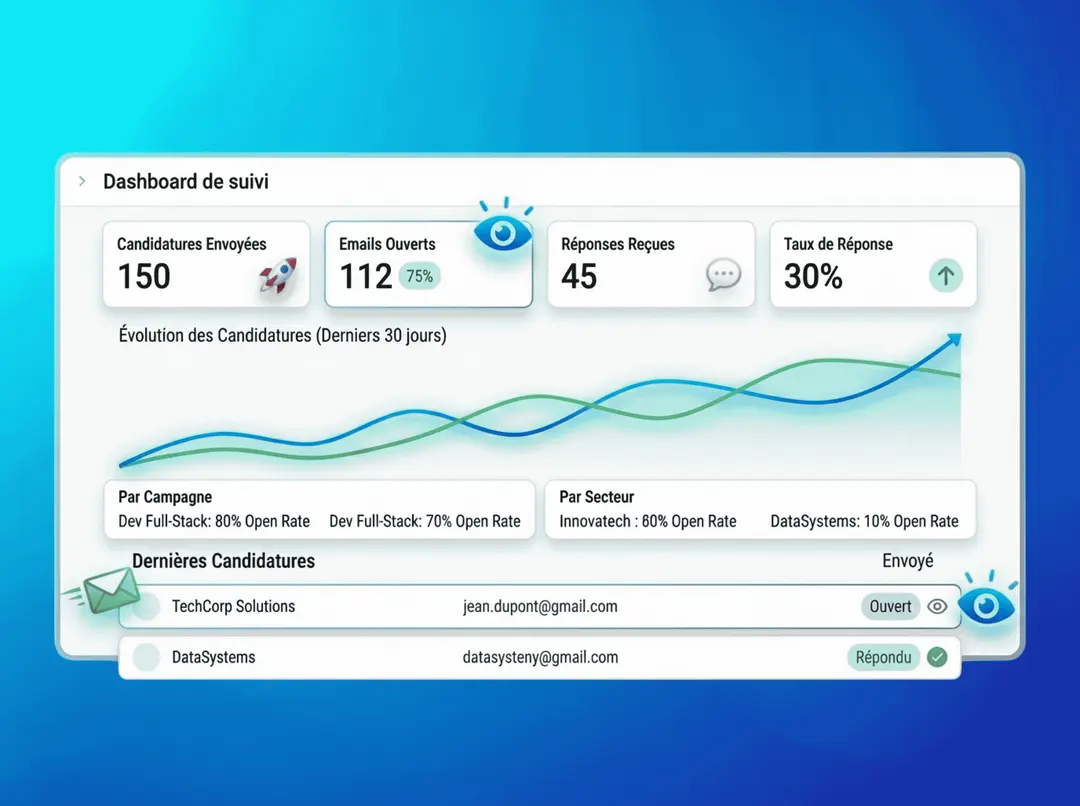
Tracking dashboard
An overview of your activity: prospects, credits, applications sent. Track your open and reply rates. Manage your progress with onboarding.
The pieces I’m proud of.
Stripe webhook & credit system
A substantial webhook handler that manages the full lifecycle of a subscription: idempotence (a replayed webhook never credits twice), distinguishing a real payment failure from a false 3DS/SCA alert, prorated upgrades, multi-level user resolution, dispute tracing. Edge cases learned in production.
Security & rate-limiting (defense-in-depth)
Multiple layers: blocking scanners and path fuzzing, decoy routes, rate-limiting per IP and per user, role-based route protection. Key principle: fail-open vs fail-closed — never block a legitimate user on latency-sensitive routes, while blocking abuse where needed.
“First-touch” marketing attribution
The acquisition source is captured on the first visit and is never overwritten. A dashboard aggregates signups, paying users and revenue by source — with conversion rate calculation by cohort.
Anti-abuse protections
Robust abuse detection and a banning system. (Details intentionally not exposed.)
An autonomous SEO content pipeline.
An independent Python microservice (FastAPI) that turns RSS feeds into scored, enriched and SEO-optimized blog articles — autonomously. A 4-step chain.
Collection
RSS feeds fetched, deduplicated, pre-filtered (noise is removed before the AI).
Editorial selection
Anti-spam, smart deduplication of duplicate topics, then AI scoring by batch (cost-efficient).
Enrichment
Summary, translation, title, keywords, structured FAQ, AI-generated cover image (CDN).
Publishing & archiving
Human validation before going live, then retention by status.
In production, scheduled jobs drive the pipeline (anti-double-execution safeguard), and a human validates each article before publication. 82 articles published, about thirty of them generated automatically in 5 months.
Real adoption, from January to May 2026.
From January to May 2026 — organic growth, solo developer, only a few weeks of advertising. Most of the traction was concentrated in the last few months: the curve clearly takes off, month after month.
Production reflexes, not tutorial ones.
Let's Get in Touch
Looking for a work-study apprenticeship in web development for September 2026, as part of my 3rd year of Computer Science. Used to shipping in real conditions: SaaS in production, 50+ freelance projects, currently interning on an internal AI platform.